It’s funny. I’ve had plenty of time to update this blog. I’m not a very busy person, and living on Jeju makes it even easier to avoid being excessively busy. I even have three blog posts I wrote and completed, but never posted.
I don’t really have an excuse or a reason. I just wasn’t feeling the blog posts I wrote, and honestly, I’ve found other ways to fill my time. But I do want to maintain a log of my life in Korea, and I’m just not one for YouTube videos or vlogs.
So here it is, I’m going to try and restart my habit for this. We’ll see how that goes. I really can’t make any promises.
My Teaching Life
I guess I’ll start with a brief update on my teaching life.
I never hated teaching when I was in uni, but it also wasn’t my passion. I’ve always been more interested in research and writing papers. That’s why I want to become a professor in the future. But something about coming here and starting to teach has completely thrown my view of teaching.
I actually really love teaching. I love the look on my students’ faces when they get something. I love how happy they are to share their progress with me. I like interacting with the other teachers and even designing lessons! (Making PPTs is another story…)
I have my own English classroom at my school, and my office space is there as well. I really love having my own office space. As someone who really needs time to decompress after teaching a class, I really need that space. It also makes lesson prep significantly easier for me, since there are fewer distractions in the form of other teachers.
I also have a decent amount of freedom with lesson planning, which can be a blessing and a curse. Having a strict structure would be nice, since I think it would allow me to lesson plan more efficiently, but there’s not much I can do to change that. I get to teach fun lessons through English, though, like how to make latte art. I couldn’t do that with a strict curriculum.

I’m writing this as I’m on my summer break, which is from July 19th to August 17th. Of course, I still have some desk-warming days (days where I go into school during the summer break and lesson plan/prep for next semester). But my actual vacation time was pretty long, so I don’t mind. I actually like how quiet the school is when no one is there other than a few members of the administrative staff.
Overall, I’m looking forward to next semester and next year. Fulbright renewal will be coming up somewhat soon (although the renewal application date is still TBD), and I’m hoping to be at the same school, since it’s become comfortable and familiar.
My Summer Break
The fun part of this post: summer break.
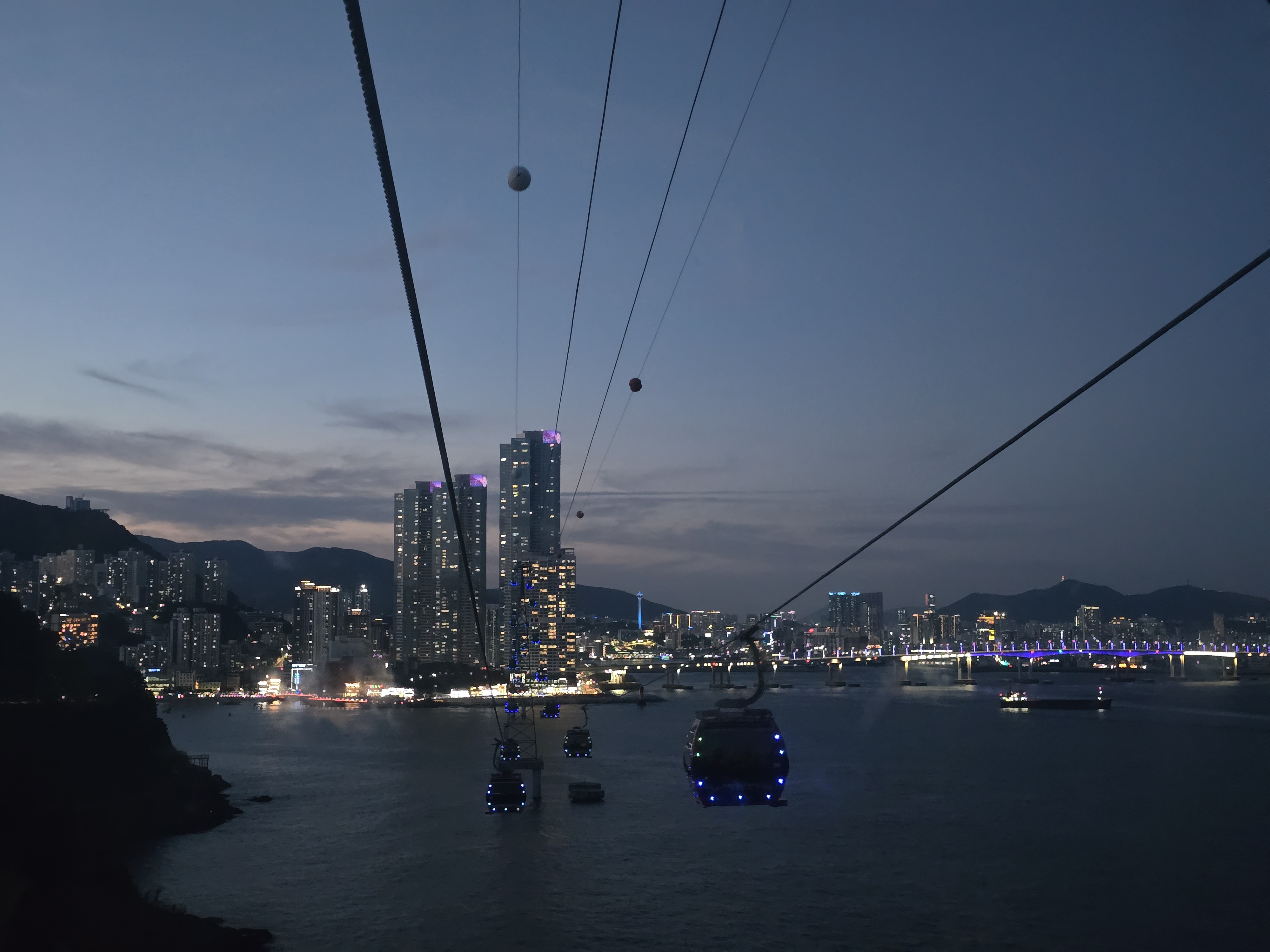
I didn’t have big plans. I know that a lot of people went abroad or did a lot of traveling, but I don’t really have the stamina for that. I’m also trying to save as much of my paycheck as possible right now for the winter. But I did have one of my best friends from Minnesota come to Korea, so we met up and did lots of touristy things on Jeju and then went to Busan together! It was all really fun, and honestly, I think I really needed to see a friend.
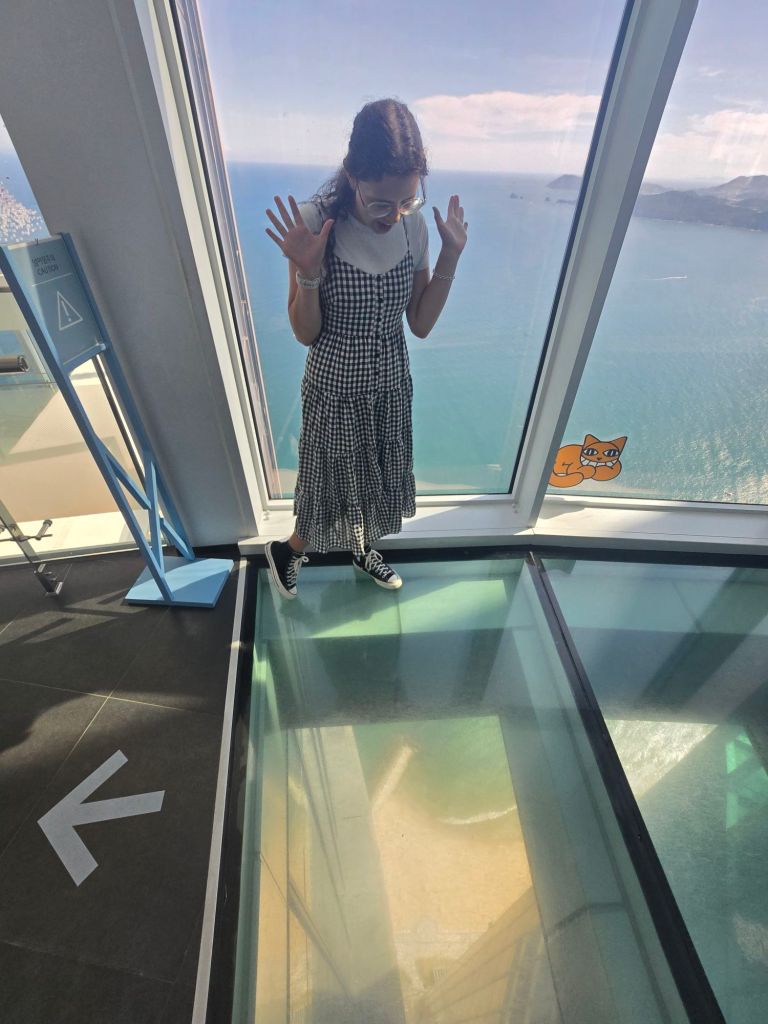
(Busan)
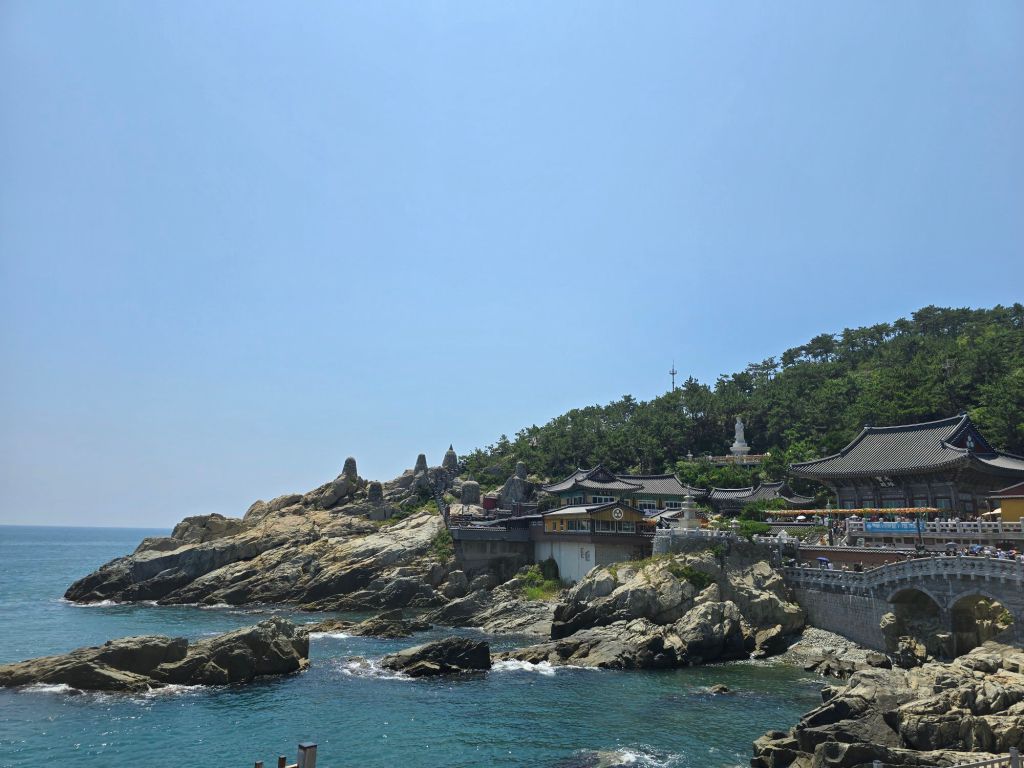
(Busan)
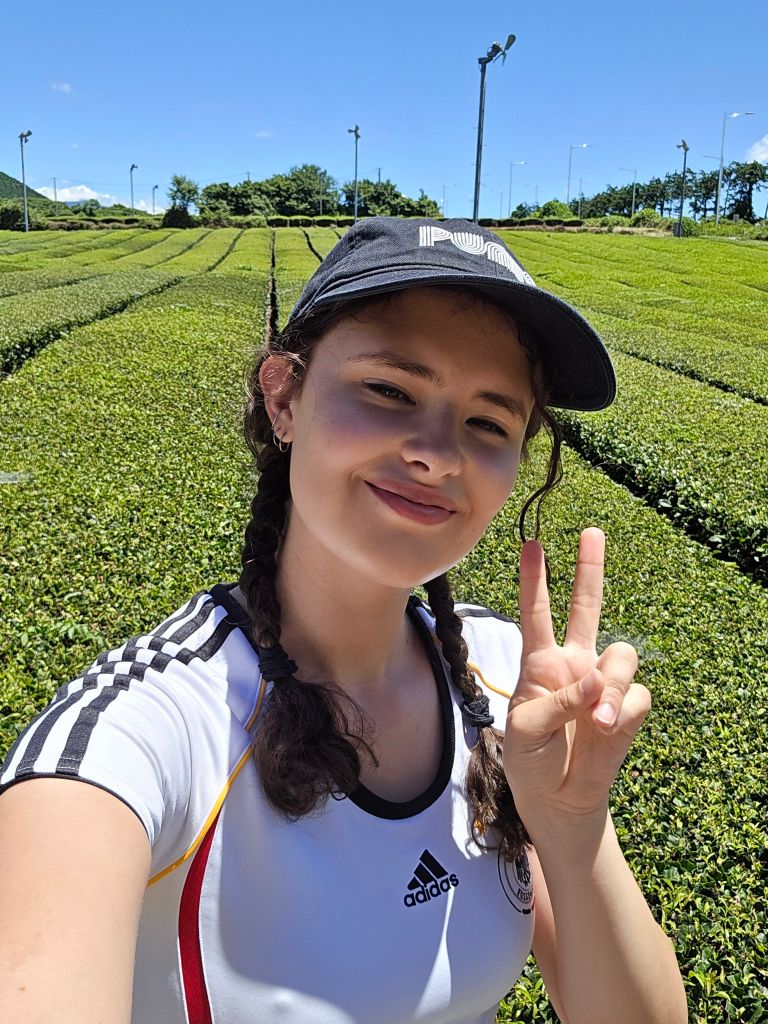
(Jeju)
The weather is terrible, though.
As someone from Minnesota and used to long winters, I wasn’t built to handle summers where the temperature is 34 Celsius (~93 Fahrenheit) and the humidity is 80%-100%, so it feels like 42 Celsius (~107 Fahrenheit). I don’t think temperatures like that should exist. I would trade the palm trees on Jeju for a Minnesota winter without a thought.
I did a lot of touristy things in Busan, and hopefully I work up the willpower to make a blog post dedicated to pictures at some point, but I’m too lazy to add them to this one. If I had to add pictures, I think this post would have never been published.
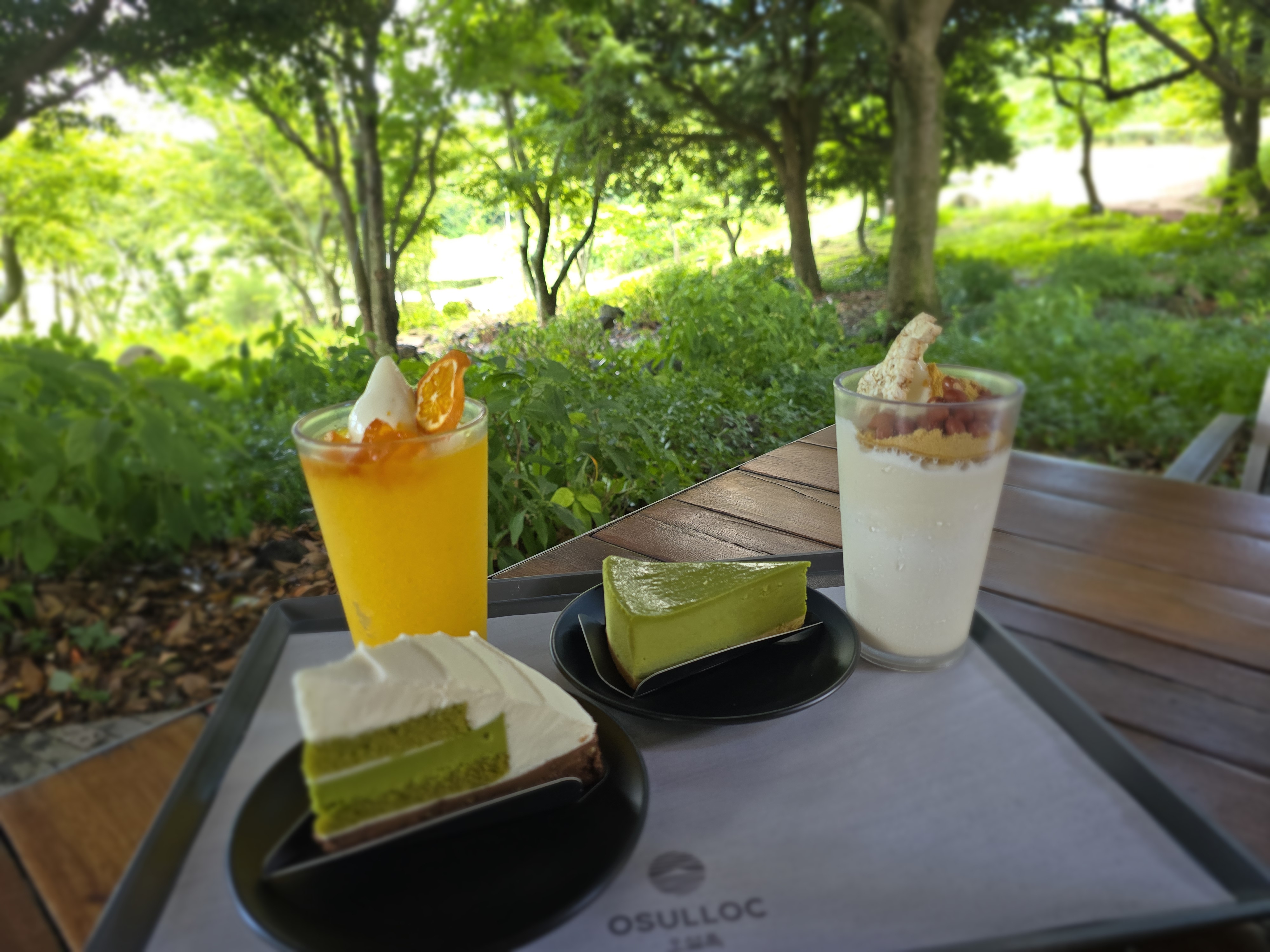
Other than that, I’ve just been frequenting cafes, doing a lot of creative writing, and studying Korean this summer break. I guess that’s a nice segue into the next section of this post.
Korean Studying Recently
In late February, I started meeting with a Korean tutor online ~2x week. At first, I just wanted to improve my spoken Korean and listening comprehension, but as time went on, I decided that I wanted to take the TOPIK II (Test of Proficiency in Korean II), which is the only Korean government-administered and official way to certify your Korean language skills. I don’t need it for anything specific right now, but since I want to go to graduate school for a Ph.D. in Korea, it will be helpful to take it in advance.
Also, I will be the first to admit that I’m not great at self-studying without a goal in mind, and just studying to improve my speaking and listening wasn’t really fostering much improvement.
I started preparing for the TOPIK II with my tutor and working through practice problems and studying with TOPIK II-specific textbooks in mid-June, and since then, my Korean has had a huge jump. I think it’s less that the test is good for teaching practical Korean (it’s really not), and more that I’m just much more consistent.
I can also attribute a lot of my improvement to my host family, particularly my host mom, who is always willing to speak Korean with me and explain words that I am unfamiliar with. Thanks to her, I think my ability to work through a conversation, even when grammar and vocabulary are unfamiliar to me, has improved a lot. Nowadays, I can probably understand between 80-95% of what I hear, depending on the topic and whether the person speaking uses any regional-specific Korean words (dialect).
(NOTE: Unless it’s a topic really specific, like discussing the results of a scientific study. Then I probably only understand like 50%.)
I’m honestly really proud of myself for my Korean improvement. There are still a lot of ways that I need to improve, and I recognize that. I’m nowhere near fluent, which is my eventual goal (or at least as close as I can get is the goal), but I’m proud of the progress that I have made so far. And who knows how much I’ll improve next year?
Back to the TOPIK II, I registered for the test, so I’ll be taking it on October 19th. The TOPIK II judges Korean from levels 3-6. I’ll list what receiving each level roughly means below (although this is not exact or official).
TOPIK 3 – Low-Mid Intermediate
TOPIK 4 – Mid Intermediate to Low Advanced
TOPIK 5 – Low-Mid Advanced
TOPIK 6 – Mid-High Advanced
The TOPIK II exam has three sections: reading, writing, and listening. Each section is worth 100 points. Writing is generally considered the most difficult. I actually feel more confident with writing than the reading section, though, which I suppose makes sense. I write a lot in English, and since I started working on deliberately improving my Korean writing skills, those have improved quickly. I think that my brain just works well for writing above anything else, in any language, honestly.
I’m aiming for a high TOPIK 4. I don’t want to aim for TOPIK 5 because I think that I’ll be disappointed if I don’t get that, whereas TOPIK 4 seems achievable. If I do better, it’ll just be a pleasant surprise.
Wrap Up
Thanks for stopping by to read this quick update! Sorry for how short and broad it was. I’m hoping to upload more, but I’ll set my goal to create a new blog post in October. That seems more achievable than saying next week or even next month.
Maybe I’ll make a post rating all the cafes that I’ve been to next?
 Jena in Korea